By Jacob K Philip
The Aircraft Accident Investigation Bureau of India (AAIB) has released its investigation report on the 14th of this month into the near-miss involving a Flydubai Boeing 737 MAX 8 operating from Dubai to Kozhikode and a Turkish Airlines Airbus A330-223F cargo aircraft flying from Chennai to Istanbul.
The incident occurred at 5:17am (IST) on Sunday, August 31, over the Arabian Sea, about 600 km west of the Gujarat coast, at an altitude of 35,000 feet.
The Traffic Collision Avoidance System (TCAS), an onboard computer-controlled safety system, issued warnings (Traffic Advisory) to the crews of both aircraft when the vertical separation between them had reduced to 836 feet and the horizontal distance was about four kilometres.

The incident highlights the risks that can arise in oceanic airspace beyond radar coverage, where air traffic control relies heavily on data-link communication between controllers and pilots. Errors in communication systems or mistakes by their operators can potentially lead to serious accidents.
Here is a short description of the events unfolded in the early morning of 31st August:
Turkish Airlines cargo flight TK6380 took off from Chennai at 3:12 a.m. At around 5:00 a.m., while cruising over the Arabian Sea at 34,000 feet and a speed of 933 km/h, the captain informed the first officer that he would be taking a controlled rest in the cockpit.
A few minutes later, the first officer sent a request to Mumbai Air Traffic Control (ATC) through the Controller Pilot Data Link Communications (CPDLC) system, seeking permission to climb to 36,000 feet.
Mumbai ATC received the request and rejected it shortly afterwards through a text message.
According to the AAIB report, the controller denied the request because Flydubai flight FZ249, operating from Dubai to Kozhikode, was approaching from the opposite direction at 35,000 feet along the same international route, P574, at a speed of about 844 km/h.
However, Mumbai ATC made a critical procedural error while transmitting the rejection. Instead of sending the response as a reply to the original CPDLC request, it was transmitted as a new message. As a result, the aircraft’s CPDLC system later generated a reminder notification, accompanied by an aural alert and a flashing blue light, indicating that the original request had not received a proper response.
When the reminder appeared, the first officer saw the message “REQ CLIMB FL360” displayed on the screen. Believing it to be a clearance from Mumbai ATC, he acknowledged it and initiated the climb. The report concludes that he had mistaken the aircraft’s own climb request for an ATC clearance.
At that time, the Flydubai aircraft was approaching in the opposite direction at FL350 and was 5.6 km away.
Meanwhile, another factor unexpectedly increased the safety margin. Earlier in the flight, the Flydubai aircraft had deviated slightly to the right of route P574 to avoid an area of light turbulence. As a result, it was laterally offset by about 3.7 km from the Turkish aircraft’s track.
As the Turkish cargo aircraft climbed towards the altitude occupied by the oncoming Flydubai aircraft at 35,000 feet, the Traffic Collision Avoidance System (TCAS) on both aircraft detected the developing conflict. When the Turkish aircraft reached 34,164 feet, both systems generated the warning: “Traffic, Traffic.”
The Turkish captain woke up to the sound of the TCAS alert. At that moment, the vertical separation between the two aircraft had reduced to 836 feet and the distance between them was about four kilometres.
Under normal procedures, aircraft operating at these flight levels are required to maintain a minimum vertical separation of 1,000 feet.
The TCAS alert continued for 14 seconds, until 5:16:58 a.m.
By then, the aircraft had already crossed each other. The vertical separation was 692 feet and the distance between them had increased to about ten kilometres. Although the altitude difference remained below 1,000 feet, the TCAS Traffic Advisory was automatically terminated because the aircraft were rapidly moving away from each other. TCAS is based on predicted collision risk rather than a fixed altitude difference.
During the TCAS warning, the captain informed the first officer that he had control of the aircraft. On checking the cockpit displays, he realised that the aircraft was climbing. When he asked the first officer whether ATC had cleared the climb, the first officer replied that clearance had been received.
To verify this, the captain pressed the CPDLC RECALL button and reviewed the displayed messages. The only message visible was “REQ CLIMB FL360″—the climb request that had originally been sent by the crew to ATC. The reminder notification that had apparently been mistaken for a clearance message was no longer visible on the active display and had likely been archived in the system history.
Concerned by the situation, the captain discontinued the climb and levelled the aircraft at 35,000 feet instead of continuing to FL360. He then sent a CPDLC message to Mumbai ATC asking whether climb clearance had been issued. ATC replied that no such clearance had been given.
Since the first officer remained convinced that a clearance had been received, the captain sent another query to ATC. The response was the same: permission to climb had not been granted.
Although the two aircraft continued safely on their respective routes without further incident, reports submitted by the crews after landing in Istanbul and Kozhikode, together with reports from Mumbai ATC, led the Aircraft Accident Investigation Bureau of India (AAIB) to classify the occurrence as a serious incident and launch a formal investigation.
Safety recommendations
Following the investigation, the AAIB issued safety recommendations to Turkish Airlines, the Airports Authority of India (AAI), and Airbus.
Turkish Airlines:
a) Reinforce CPDLC procedures, through training, emphasise on verification of message content (Reminder/received from other units) before executing clearances.
b) Operation Manual of the airline may be amended by adding that, “During the controlled rest period the requests which requires cross check such as significant flight path/Flight Level changes should be avoided unless they are deemed necessary.”
Airports Authority of India:
Conduct recurrent training for controllers on the risks of sending stand-alone CPDLC uplink messages in reply to aircraft requests.
Airbus:
The safety action has already been carried out by Airbus. Airbus has stated that the system now on will not display the reminder message. (The removal was based on the consideration that the flight crew are better positioned to determine appropriate follow-up actions in the absence of an ATC response.)
-
jacob@indianaviationnews.net
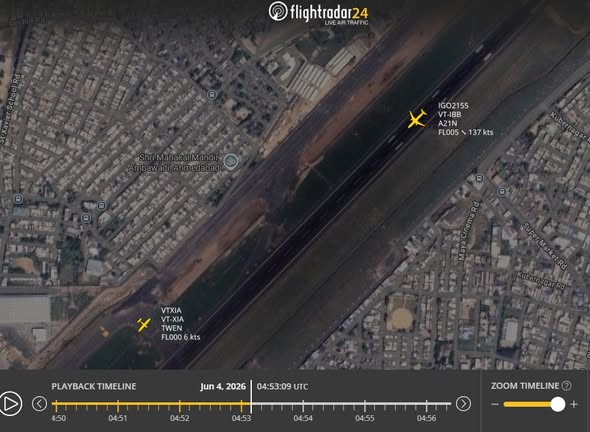
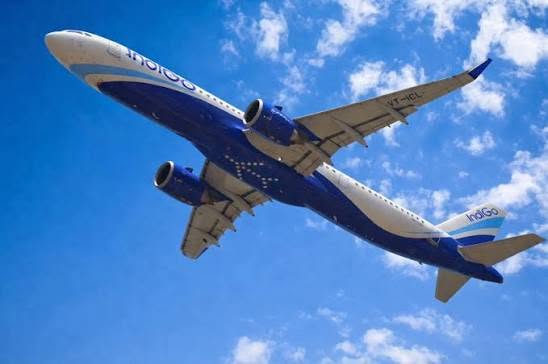
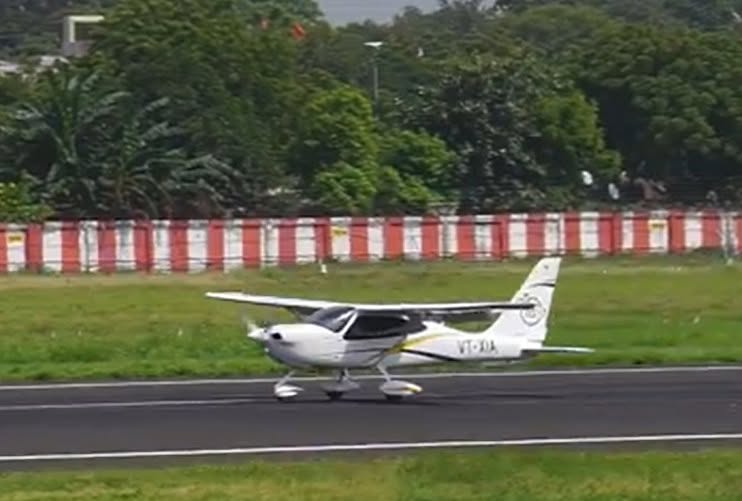 As the IndiGo aircraft descended towards Runway 23 and reached 425 feet, a Tecnam P2010 TDI aircraft (registration VT-XIA), operated by Ahmedabad-based Air Taxi, was seen moving at about 11.1 km/h near a taxiway connected to the runway.